

Are you fed up with unclear fitness goals that never get you results? How many times have you set a vague goal like “lose weight” or “get in shape”, only to lose motivation within a few weeks because you had no clear idea of what you’re working towards? I know I’ve been there plenty of times in my fitness journey.
Setting goals is important, but if they aren’t structured effectively it’s easy to spin your wheels in the gym without any real progress. Have you ever wondered if there was a better, more results-driven way to define your objectives?
Well, I’m here to tell you that there is – and it’s called the SMART goal setting framework. By following some simple guidelines for making your fitness goals Specific, Measurable, Achievable, Relevant and Time-Bound, you have a proven blueprint for success.
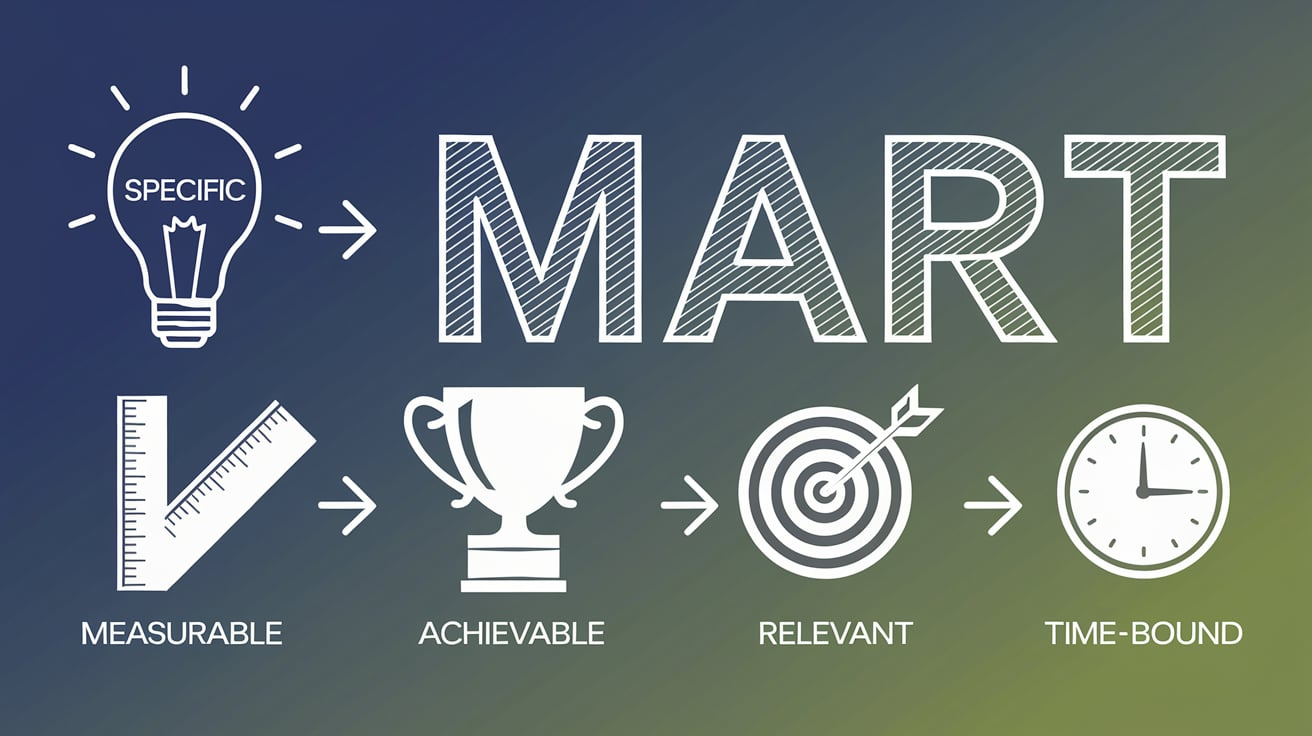
What are SMART Goals
SMART is an acronym that stands for:
- Specific
- Measurable
- Achievable
- Relevant
- Time-Bound
The SMART framework was originally developed in the 1980s to assist with setting effective business objectives. Since then, it has been widely adopted for personal goals as well due to its simplicity and effectiveness. Let’s explore each element in more detail.
Specific Goals
The “S” in SMART underscores the importance of being crystal clear about exactly what you want to achieve. Vague, wishy-washy goals like “get fit” or “lose some weight” will not motivate you over the long run because there’s no clear target to work towards.

Instead, really define the specifics of your goal. For example:
- “Lose 10 pounds by June 1st.”
- “Be able to run 3 miles continuously without stopping by my birthday in August.”
- “Increase my bench press max from 125 lbs to 150 lbs within 6 months.”
Give yourself a very clear picture of what “success” looks like so you know exactly what you’re striving for each day in the gym.
Measurable Goals
Measurability, the “M” in SMART, ensures that you can track your progress objectively over time. Without quantified markers, it’s impossible to know if the strategies you’re using are truly moving the needle.
Some ways to make your fitness goals measurable include:
- Weight in pounds (lost or lifted)
- Distance or time (miles run in a certain time period, minutes spent in the cardio zone during workouts)
- Circumference measurements (waist, hips, biceps)
- Exercise benchmarks (working up to a certain weight on a lift, being able to do X number of pullups)
Choosing measurable metrics that you can easily track keeps you accountable and motivated as the numbers rise.
Achievable Goals
Your goals need to be challenging enough to drive improvement, yet realistic given your starting point and commitment level. The “A” stands for achievable – if goals seem impossible, you risk losing motivation quickly when results don’t materialize overnight.

When setting goals:
- Evaluate your current abilities and fitness baseline honestly
- Consider factors like your schedule, experience level, access to equipment or classes
- Start with incremental targets that push your limits a bit, not extreme transformations
- Break large goals into smaller steps for a sense of regular achievement
With consistent effort, achievable goals will still help you reach new heights over the coming months.
Relevant Goals
A goal’s relevance, denoted by the “R,” speaks to its connection to what really matters to you. Fitness objectives won’t stick if they don’t link to your core values, interests and long-term aspirations.
Ask yourself:
- How does this goal support my overall health, wellness and quality of life?
- What activities do I genuinely enjoy that I can continue for the long haul?
- Will accomplishing this goal feel genuinely fulfilling or just like a box checked?
When goals align with your personal priorities, you’ll be highly motivated to follow through no matter what challenges arise.
Time-Bound Goals
The “T” represents goals that are time-bound with clear deadlines. Putting an expiration date on your targets creates a sense of urgency plus markers to stay on track.
When setting your timeline:
- Choose a specific completion date, such as 3 months or 6 months from now
- Build in intermediate due dates to evaluate progress frequently
- Allow some flexibility – life happens, so be open to adjust dates if needed
Having objectives tied to a calendar takes the wishy-washiness out of goals and sustains your commitment.
Now that we’ve explored each letter, let’s combine them into an example of a full SMART fitness goal:
By January 15th, I want to lose 12 pounds and be able to run 3 miles continuously without stopping to improve my cardiovascular health and feel more confident in a bathing suit this summer.
This goal is:
- Specific: 12 lb weight loss, run 3 continuous miles
- Measurable: Pounds, miles
- Achievable: Incremental targets given current level
- Relevant: Health and confidence goals matter to me
- Time-Bound: January 15 deadline
The SMART criteria provide the backbone, now let’s discuss additional strategies to really maximize your success.
Practical Tips for Setting Effective Goals
Now that you understand the SMART framework, here are some more hands-on tips to turn your goals into a reality:
Write It Down
Putting pen to paper makes goals feel official and concrete. Record your SMART targets where you’ll see them daily for motivation. Whiteboards, planners, apps – whatever works for you.
Tell Others
Share your goals with friends, family or workout partners. Knowing others are rooting for you increases commitment and accountability.
Visualize Success
Take 5 minutes daily to close your eyes and imagine feeling, looking and experiencing life having achieved each goal. This strengthens mental programming for results.

Break Into Small Steps
Rather than just an end date, map out interim achievements. Example: “Lose 4 pounds by November, another 4 by December, last 4 by January target.”
Track Progress Consistently
Take regular measurements and log weights, times, reps. Recording advancement keeps you invested even during plateau periods.
Celebrate Wins
Give yourself praise and rewards for hitting milestones. Small treats stay motivating in longer journeys. Example: New activewear at the halfway mark.
Seek Guidance As Needed
Consult fitness professionals if you need help designing a safe, effective plan or troubleshooting roadblocks.
Allow Flexibility
Life changes, so be willing to modify targets respectfully as needed. The focus is progress – keep moving forward.
Maintain Perspective
Goals are not pass/fail – each day is an opportunity to further invest in your wellbeing. Appreciate non-scale victories too.
By thoughtfully applying the above complementary tactics, your SMART goals transition from possibilities to unstoppable momentum. Now it’s time to get specific!
Examples of SMART Fitness Goals
To help cement the guidelines, here are some detailed SMART goal examples you can adapt for your own journey:
Lose Body Fat Example
By March 31, I will lose 12 pounds (5% of my body weight) and reduce my waist circumference by 2 inches to improve my overall health.
- Specific: Lose 12 lbs, waist down 2 inches
- Measurable: Pounds, inches
- Achievable: 1 lb/week is safe rate of loss
- Relevant: Goal supports better health
- Time-Bound: March 31 deadline
Strength Training Example
By June 15, I will increase my back squat max from 125 lbs to 150 lbs by following a 3x/week full body strength program to build lean muscle mass.
- Specific: Back squat max to 150 lbs
- Measurable: Weight lifted
- Achievable: 25 lb increase in 4 months is doable progression
- Relevant: Goal aligns with muscle-building interests
- Time-Bound: June 15 deadline
Cardiovascular Example
By November 1, I will run a 5K (3.1 miles) in 30 minutes or less to prepare for a charity turkey trot and improve my endurance.
- Specific: Run 5K in 30 minutes or less
- Measurable: Distance, time
- Achievable: Gradual build-up from current training level
- Relevant: Goal preps for fun event while bettering fitness
- Time-Bound: November 1 deadline
As you can see, these examples clearly outline goals supported by the SMART guidelines. Take some time to craft objectives tailored to your own needs and interests using this framework.
Additional Tips For Staying Motivated
Now that we’ve covered goal-setting best practices, here are a few final keys to help maintain motivation and actually achieve your targets:
Track Progress Visually
Seeing tangible forward motion spurs continued effort. Post a dry-erase board, create a spreadsheet, or use a fitness app to mark changes over time.
Schedule Workouts in Advance
Commit to training days/times each week to remove mental barriers from the process. Block them off in your calendar.
Vary Your Routine Regularly
Mixing up your workouts with new classes, formats or challenges stops boredom and plateaus. Introduce changes every 4-6 weeks.
Find an Activity Partner
Working out alongside someone adds accountability plus social motivation to show up and push harder together.
Meal Prep and Track Nutrition
Healthy eating supports your workouts, so carve time weekly to plan and prep satisfying yet nutrient-dense meals. Weigh and log for progress clarity.
Celebrate Successes Big and Small
Make a note of all victories, from PRs to non-scale wins like better sleep or mood. Highlighting advances keeps the positivity flowing.
Adjust Goals Respectfully
If/when real-life interrupts, adjust targets appropriately rather than risk burnout. Staying active in a sustainable way is the priority.
With a well-structured plan supported by routines like these, achieving your SMART goals is fully within reach. Consistency and patience will unlock continuous progress. Remember to enjoy the journey!